

Update time:2025-12-19 View count804
In the field of microbiological testing,Automatic colony counterIt is an important tool for improving laboratory efficiency and accuracy. Faced with a variety of devices on the market, choosing the instrument that suits one's own needs requires comprehensive consideration of the following five key elements.
1、 Match the detection requirements
Firstly, it is necessary to clarify the specific testing requirements of the laboratory. There are differences in the requirements for colony counting in different application scenarios, and the demands for instrument functionality and accuracy vary in fields such as food testing, pharmaceutical production, and environmental monitoring. Consider the types of bacterial colonies and culture media used in daily testing, as well as the expected number of samples to be processed, and select equipment that can meet these specific requirements. It is also important to evaluate whether the instrument can adapt to potential future expansion of testing projects, ensuring that the equipment has a certain degree of flexibility and upgrade space.
2、 The reliability of image recognition technology
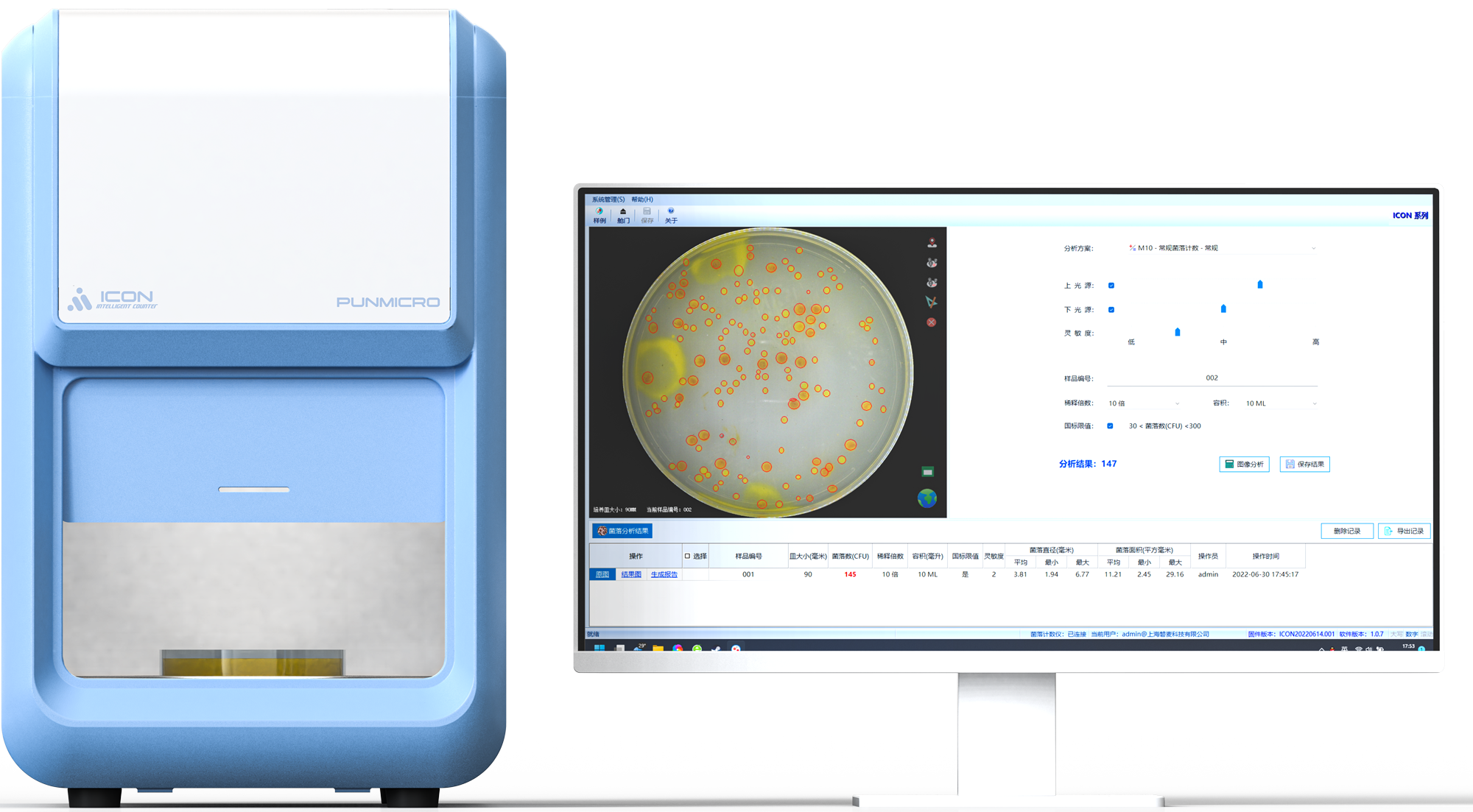
Image recognition technology isAutomatic colony counterThe core. The equipment should have intelligent colony recognition algorithms that can accurately distinguish colonies from impurities, bubbles, or other interferences in the culture medium. Consider the instrument's ability to recognize colonies of different sizes, colors, and shapes, especially in complex backgrounds. Observing whether the device provides image preview and manual correction functions is helpful for handling difficult samples. Understanding the lighting system and imaging technology used in the equipment, good optical design can improve recognition accuracy. At the same time, evaluating the user friendliness of the software, an intuitive user interface can greatly improve work efficiency.
3、 Convenient operation and work efficiency
The ease of use of equipment directly affects daily work efficiency. Choose instruments with intuitive operating interfaces to reduce training time and operational errors. Consider the simplicity of the sample processing process, including whether the steps of placing the culture dish, scanning process, and data export are smooth. Evaluate whether the working speed of the instrument can meet the daily flux requirements of the laboratory without affecting counting accuracy. Observing whether the equipment supports continuous operation mode and batch processing capability is particularly important for high-throughput laboratories. A good user experience also includes device stability, failure rate, and ease of daily maintenance.
4、 Data Management and Compliance
In highly regulated fields, data integrity and compliance are crucial. Choose instruments that can provide complete data recording and traceability functions to ensure that the test results are verifiable. Evaluate whether the software has audit trails, electronic signatures, and other functions that comply with GMP, GLP, and other standards. Consider data storage methods, including local storage and cloud backup options, as well as compatibility with data export formats. The instrument should be able to generate reports that comply with industry standards, facilitating the sharing and archiving of results. Understand whether the supplier provides software upgrade services to ensure that the equipment can adapt to constantly updated regulatory requirements.
choiceAutomatic colony counterIt is a decision-making process that requires comprehensive consideration. By evaluating these five elements, the laboratory can select detection equipment that meets current needs and has long-term value, providing reliable technical support for microbial detection work.
Product
resource
News application
Contact Us
+862154847628
Contact Phone Number©2026 PunmicroCopyright


 Microbial research
 Microbial testing
 Solution
 English
 Français
 Deutsch
 España
 بالعربية
 Русский язык
 हिंदी भाषा
